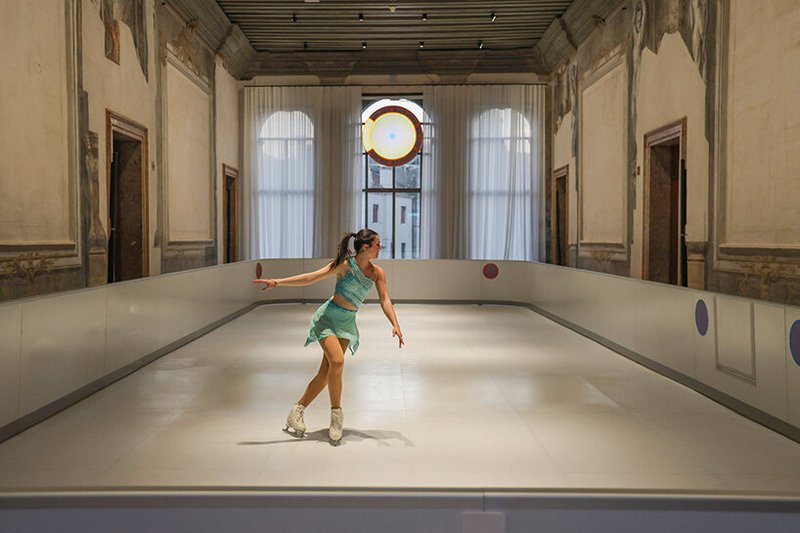
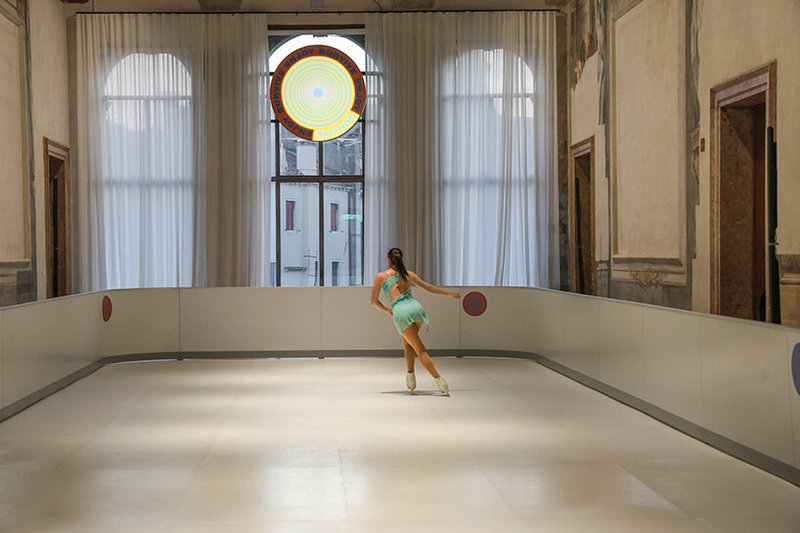
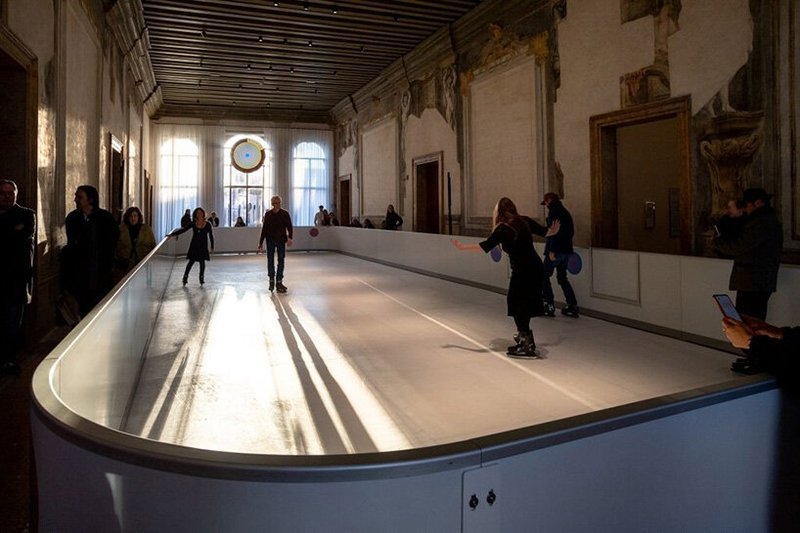
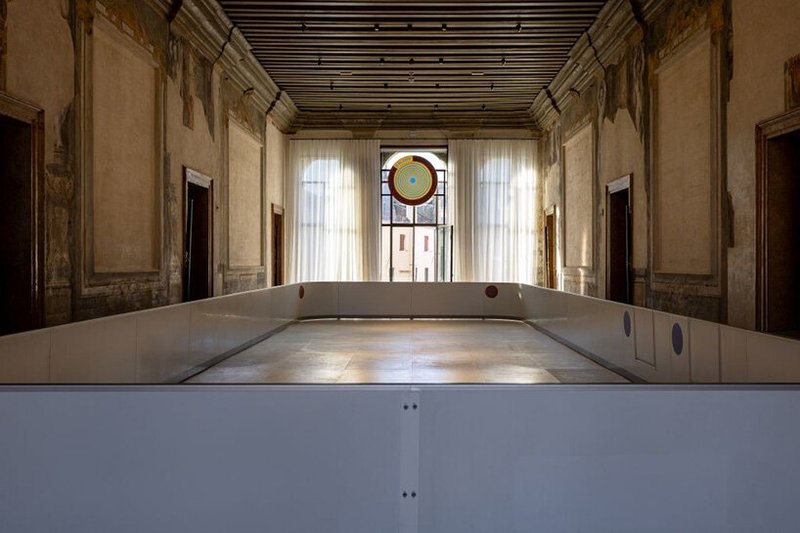
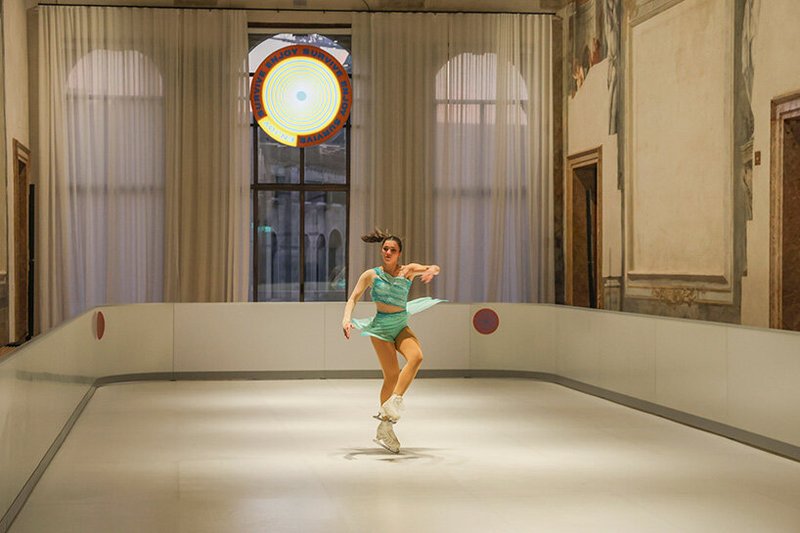
As winter's embrace envelops Venice, an unexpected transformation unfolds within the hallowed walls of Palazzo Diedo. Olaf Nicolai's Eisfeld II: Enjoy / Survive graces the frescoed banqueting hall, introducing an ephemeral layer of frozen elegance. Spanning 100 square meters, this skating rink extends an invitation to glide amidst history, where Baroque ornamentation meets contemporary innovation.
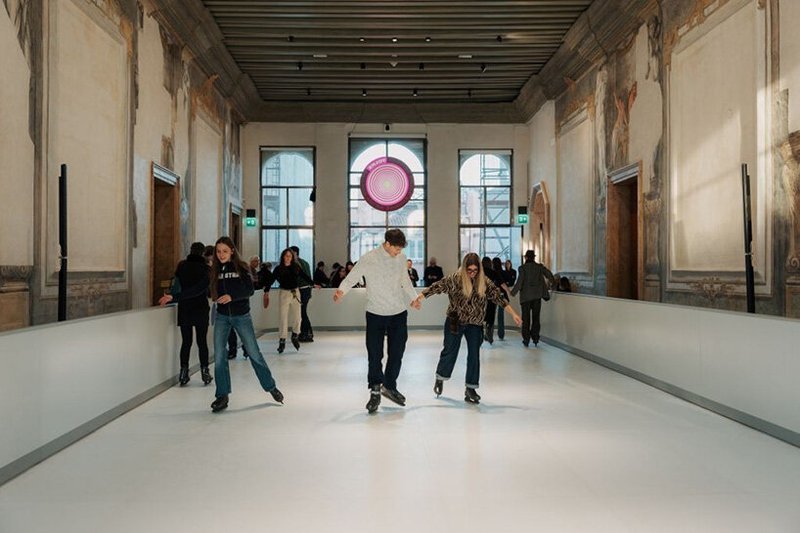
Presented by Berggruen Arts & Culture, this installation, which remains open until February 22nd, 2026, coincides with the Winter Olympics, offering an intricate dialogue between sport and art. Nicolai’s work, originally conceived in 2001 for the Migros Museum für Gegenwartskunst in Zurich, finds new life within this Venetian context. Eisfeld II employs sustainable technology, a marvel in itself, simulating the icy surface without compromising the integrity of this historic interior. The rink becomes a realm where physical activity intertwines with perceptual exploration, inviting participants to consider the delicate balance between enjoyment and endurance.
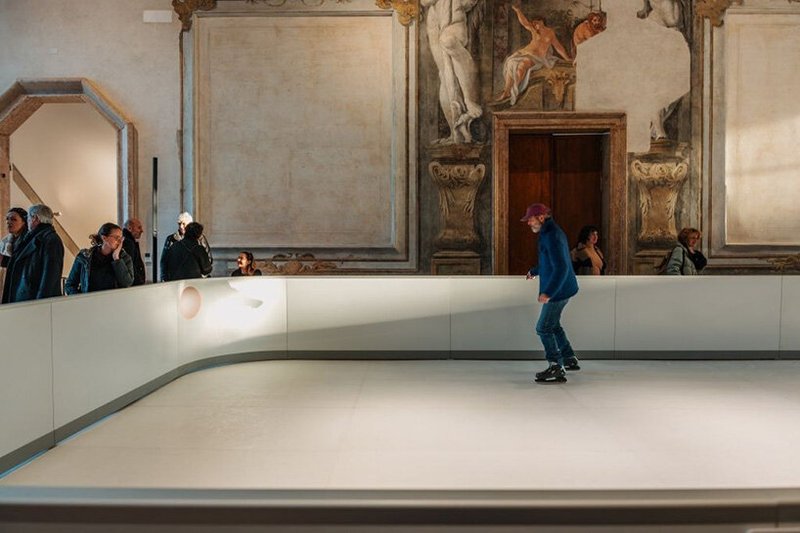
The ambient soundtrack envelops the space, crafting an auditory tapestry that mingles with the rhythmic swish of skates. This auditory layer amplifies the sense of estrangement, as sound, motion, and the grandeur of architectural ornamentation converge. The visual spectacle of Baroque frescoes juxtaposes with the engineered precision of the skating field, highlighting the tension between historical permanence and transient, corporeal experience.
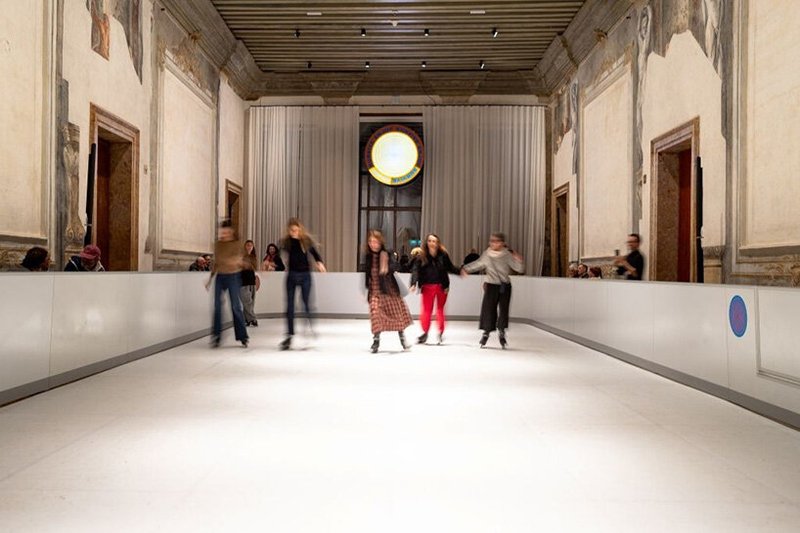
At the rink’s extremities, Nicolai strategically positions two enigmatic lightboxes titled ENJOY/SURVIVE (I & II). These luminous sentinels introduce a conceptual axis through the installation, challenging participants to ponder the duality of pleasure and peril inherent in the act of skating. The rink thus transforms into a reflective arena, where the conditions of enjoyment are scrutinized through the lens of necessity and survival.
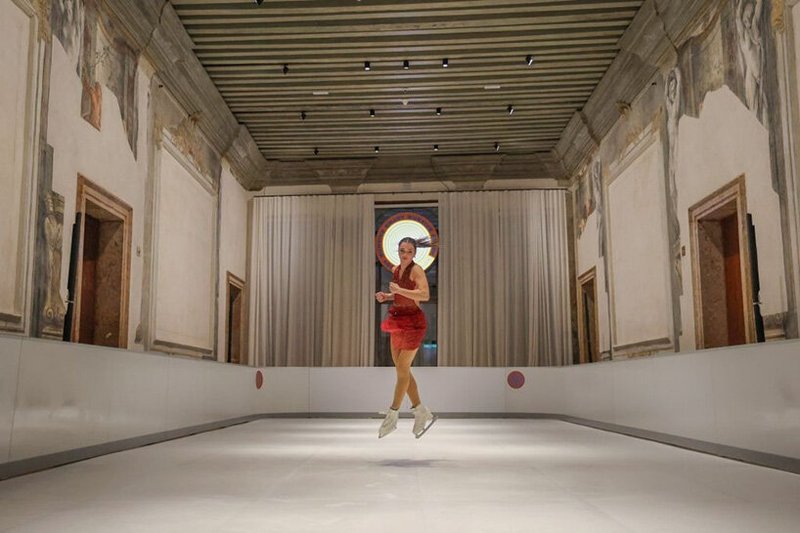
Eisfeld II, in its Venetian manifestation, not only adapts to a new architectural and cultural milieu but also rekindles inquiries into the frameworks of participation, leisure, and spectacle. Nicolai’s reimagined work invites a reconsideration of how institutions shape the narrative of engagement, demanding active involvement rather than passive observation.
In the grand narrative of architecture and art, Eisfeld II stands as a testament to the symbiosis of past and present. It is a tribute to the resilience of creative expression, where the echoes of history reverberate through the graceful arcs of skaters, leaving ephemeral traces upon the storied parquet of Palazzo Diedo.