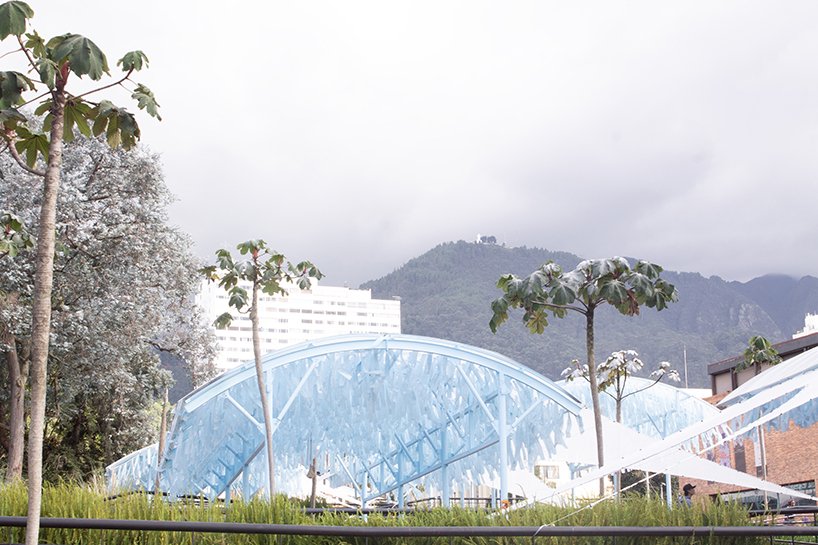
In the heart of Bogotá, where urban life pulsates with eclectic vigor, a poetic structure emerges and vanishes like a fleeting dream: La Memoria del Río. This modular cultural pavilion, envisioned by Alsar-Atelier in collaboration with SDRD, is a testament to the harmonious dance of architecture and nature, drawing inspiration from the city's intricate river systems. The pavilion stands as a reversible urban infrastructure—an ephemeral installation that promises cultural vitality without imposing permanence.
Positioned within the vibrant context of Bogotá's urban fabric, La Memoria del Río serves as a dynamic cultural catalyst, effortlessly migrating across diverse neighborhoods. Its conceptual birth draws from the fluidity of Bogotá's hydrological tapestry, where rivers descend from the eastern mountain range, meandering through varied landscapes before reaching the expansive savanna. Embracing this narrative of movement and adaptation, the pavilion embodies a flexible architectural framework that redefines public space.
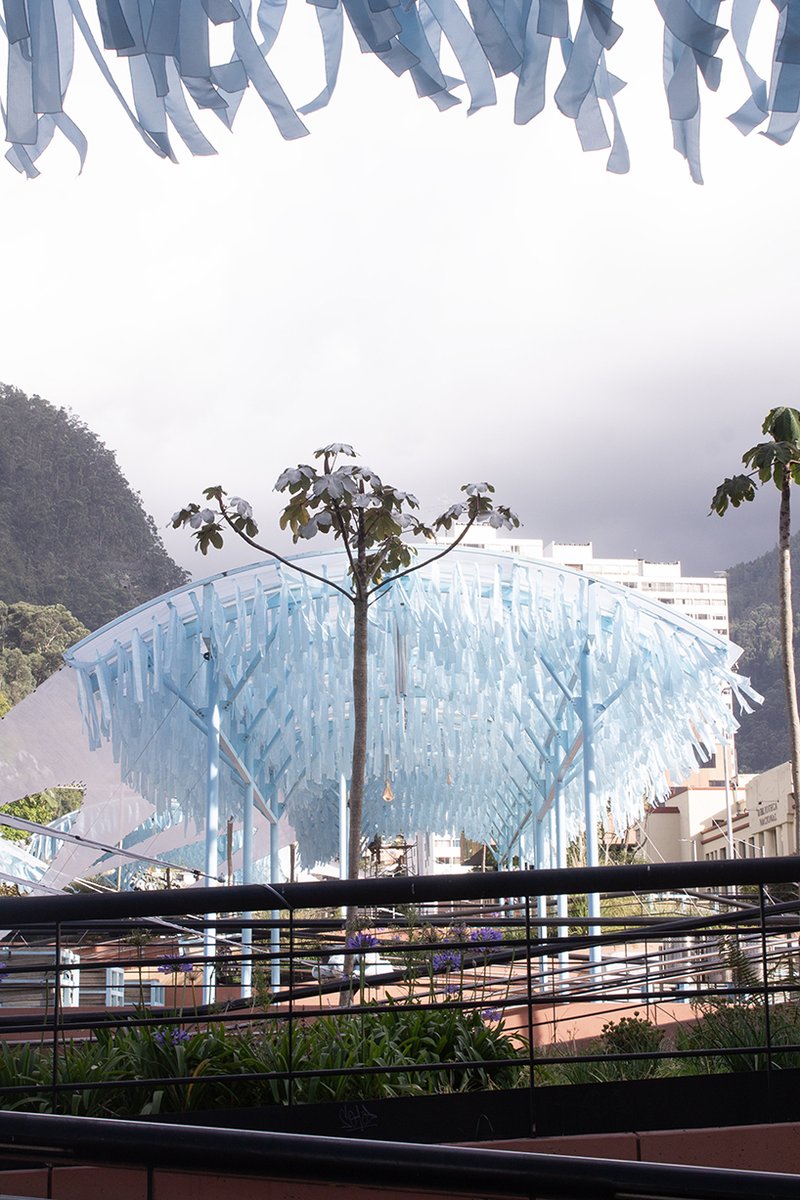
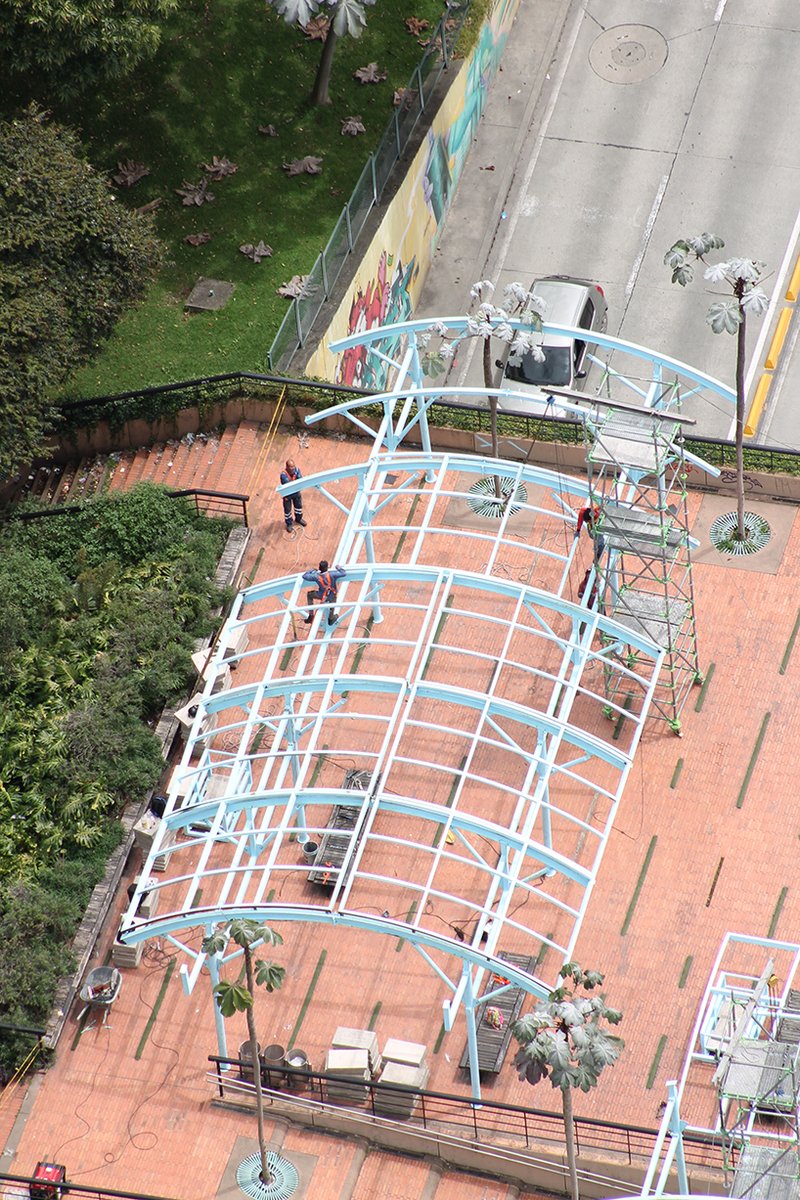
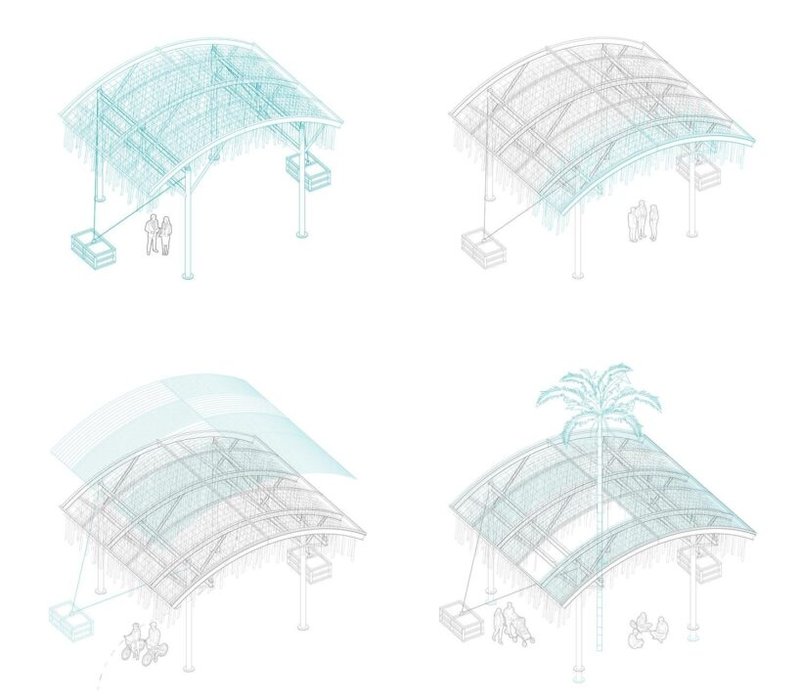
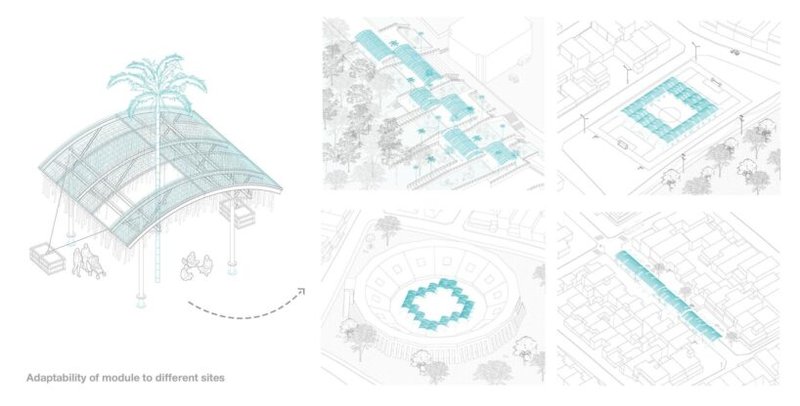
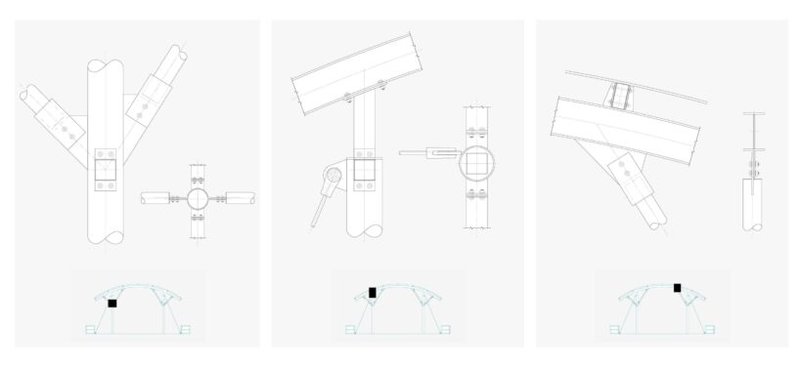
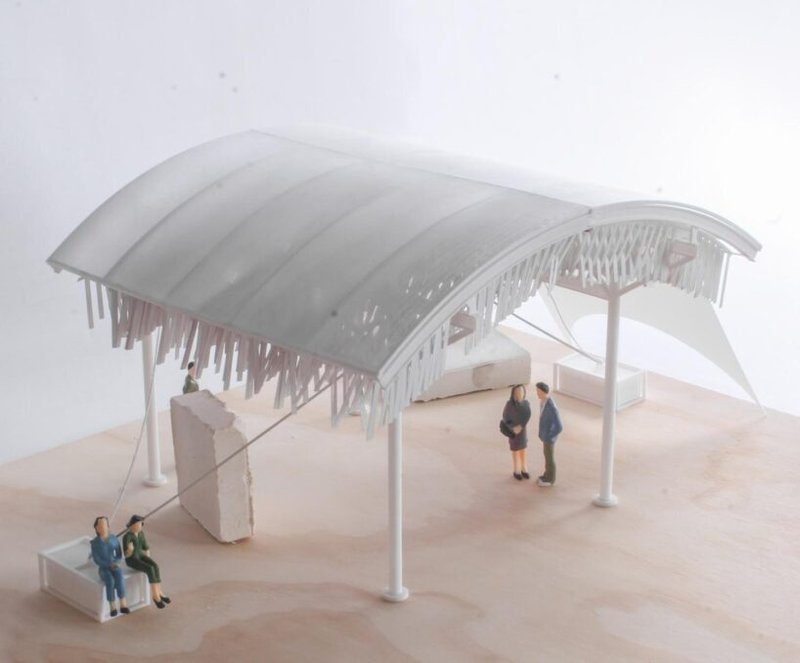
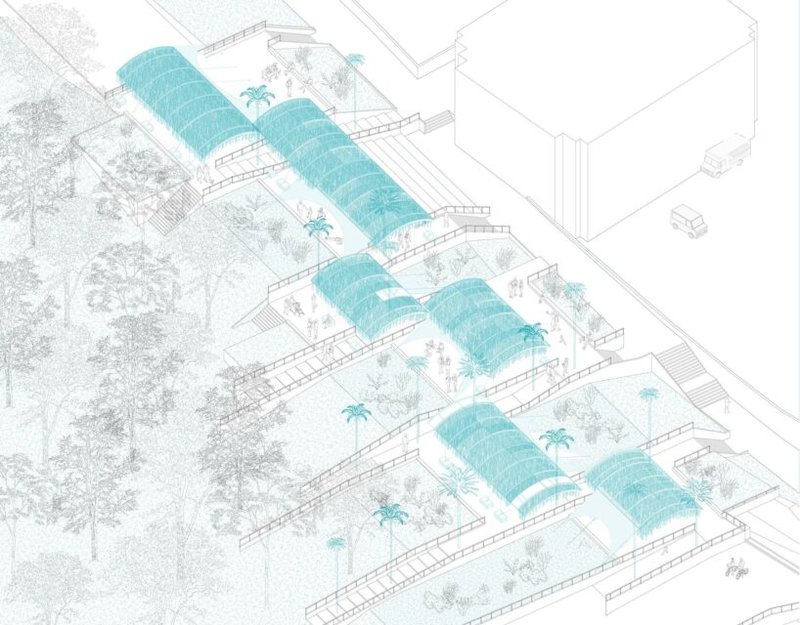
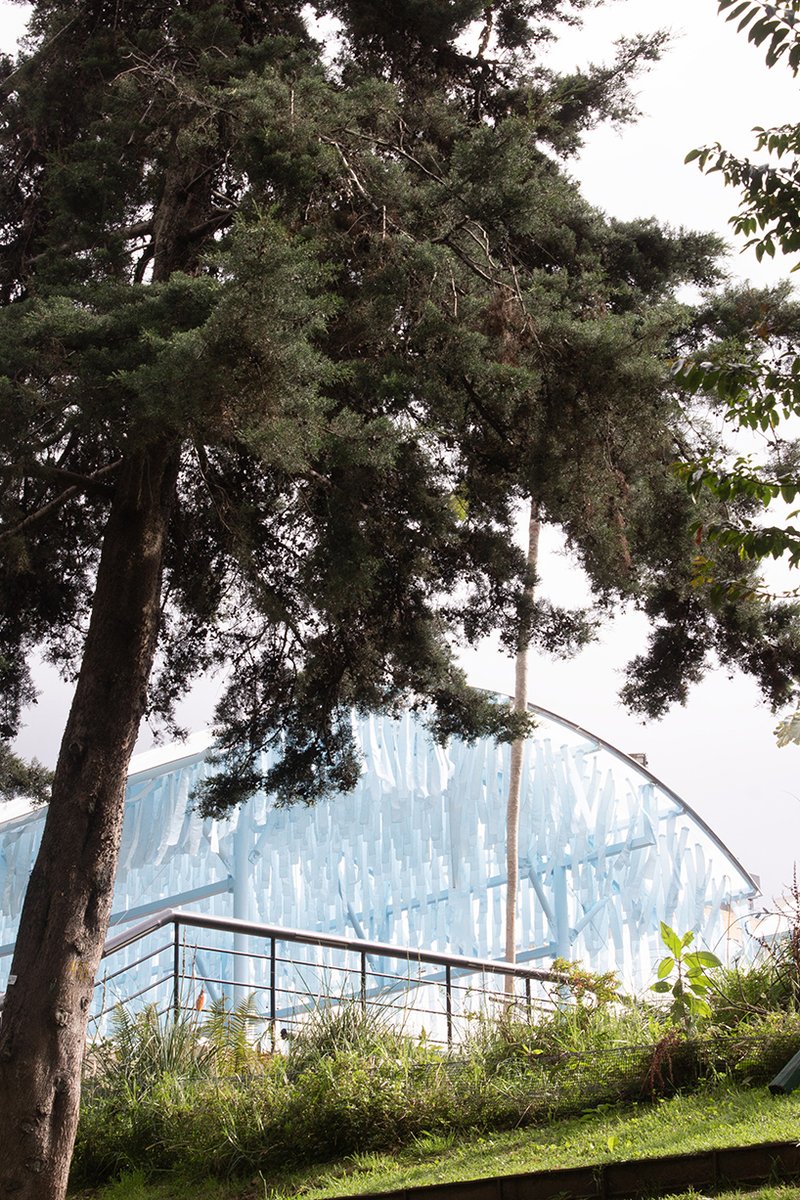
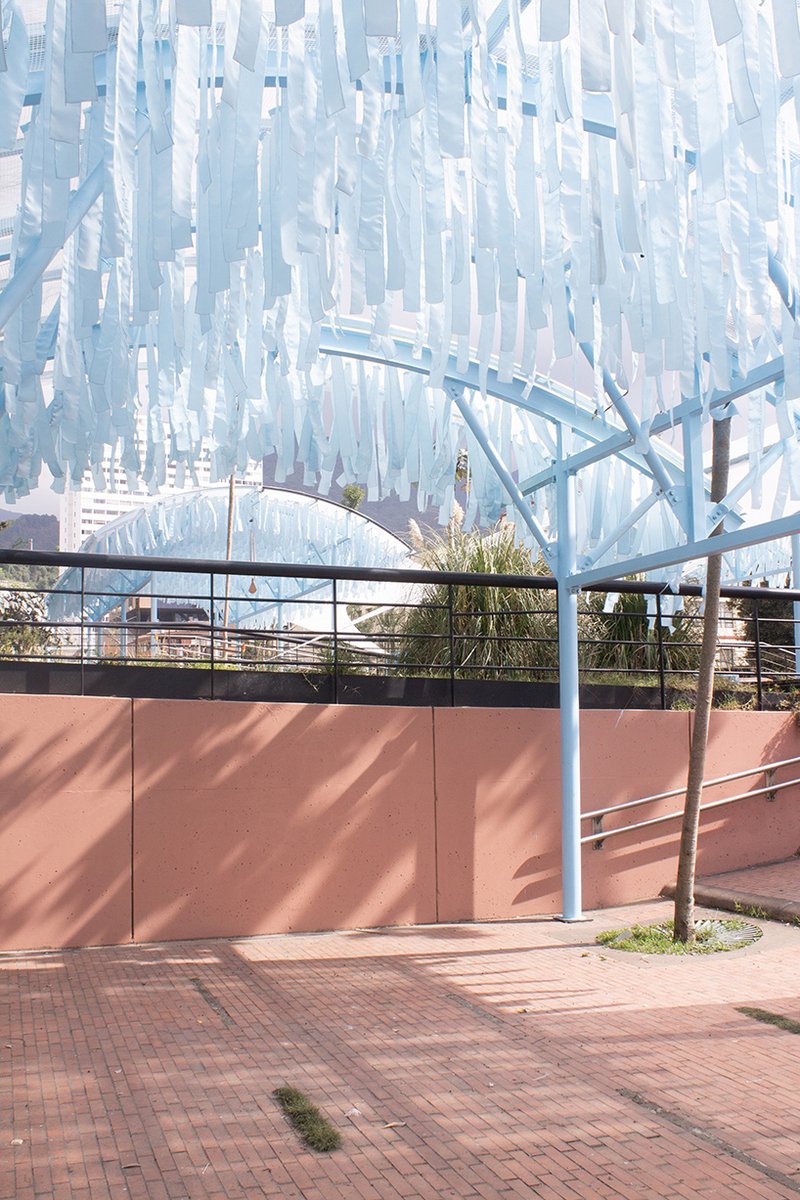
At first glance, the pavilion's modular roof structure captivates with its expressive fluidity, a metaphorical echo of rippling streams. The design team, comprising El Líder S.A.S., INGEACERO, and Alsar-Atelier, crafted a modular unit of remarkable dimensions—6 meters in length, 8 meters in width, and 5 meters in height. This vaulted geometry allows for unidirectional expansion and subdivision, adapting seamlessly to various urban scenarios. Constructed entirely with dry connections, the system facilitates swift assembly and disassembly, ensuring minimal environmental impact across its temporary locations.
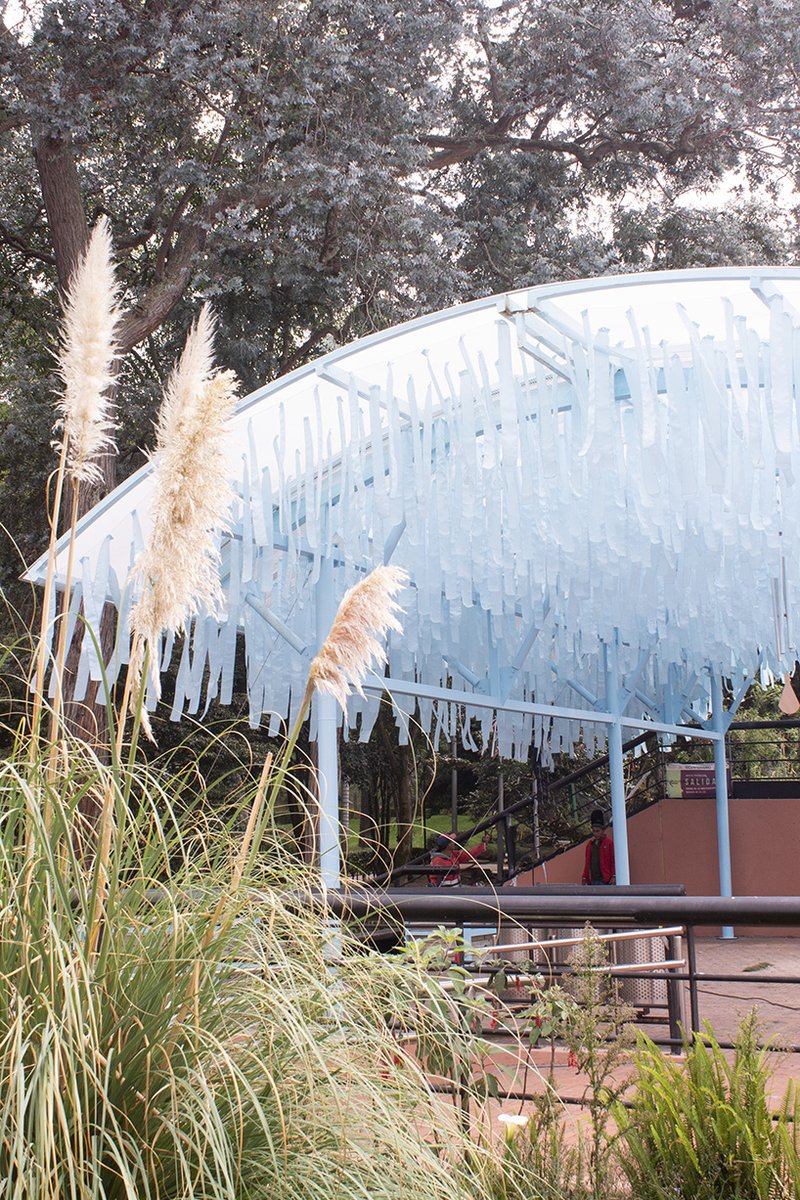
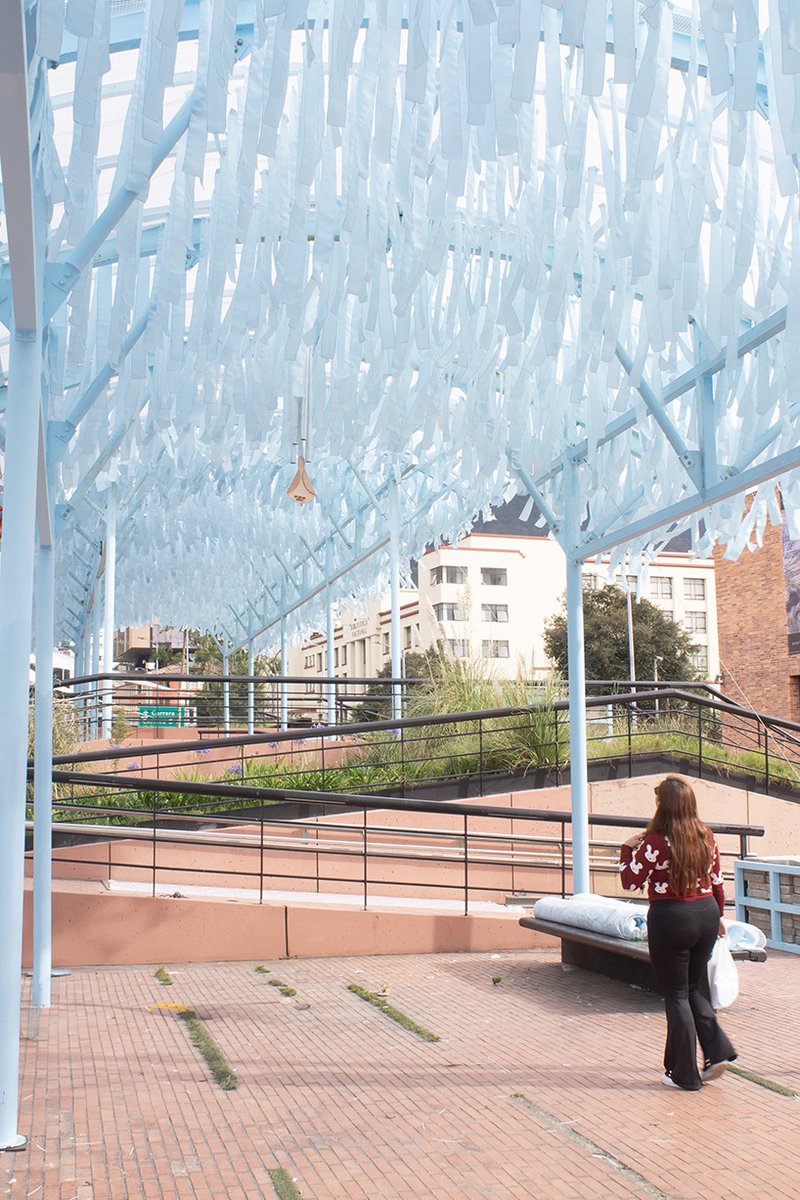
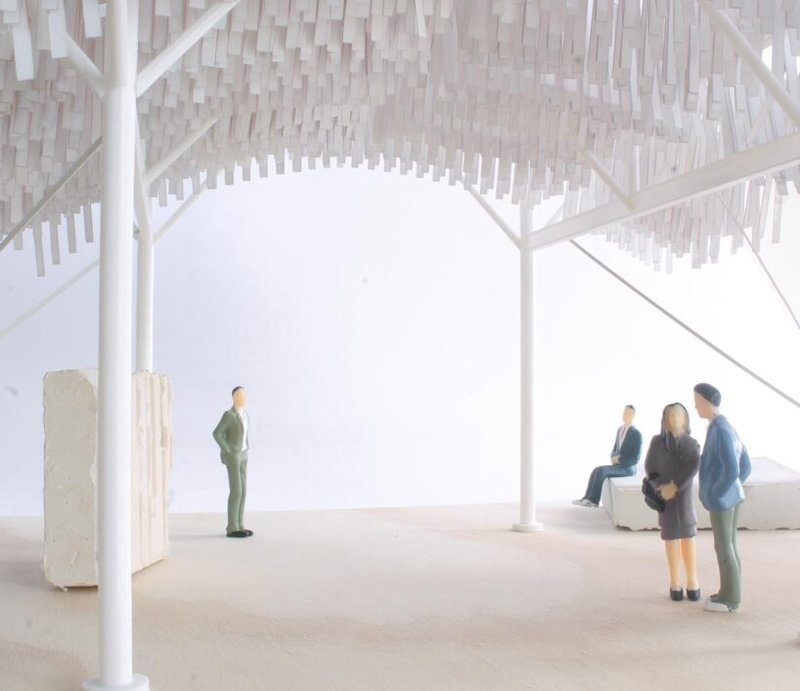
Suspended beneath the ethereal transparency of a polycarbonate canopy, approximately 15,000 blue fabric fragments flutter in the breeze. This installation conjures an abstract, spatial interpretation of flowing water, where light and shadow dance in perpetual harmony. The pavilion's interior is an ever-changing tableau, responding to the whims of the wind and the rhythm of the day, thus reinforcing its transient essence.
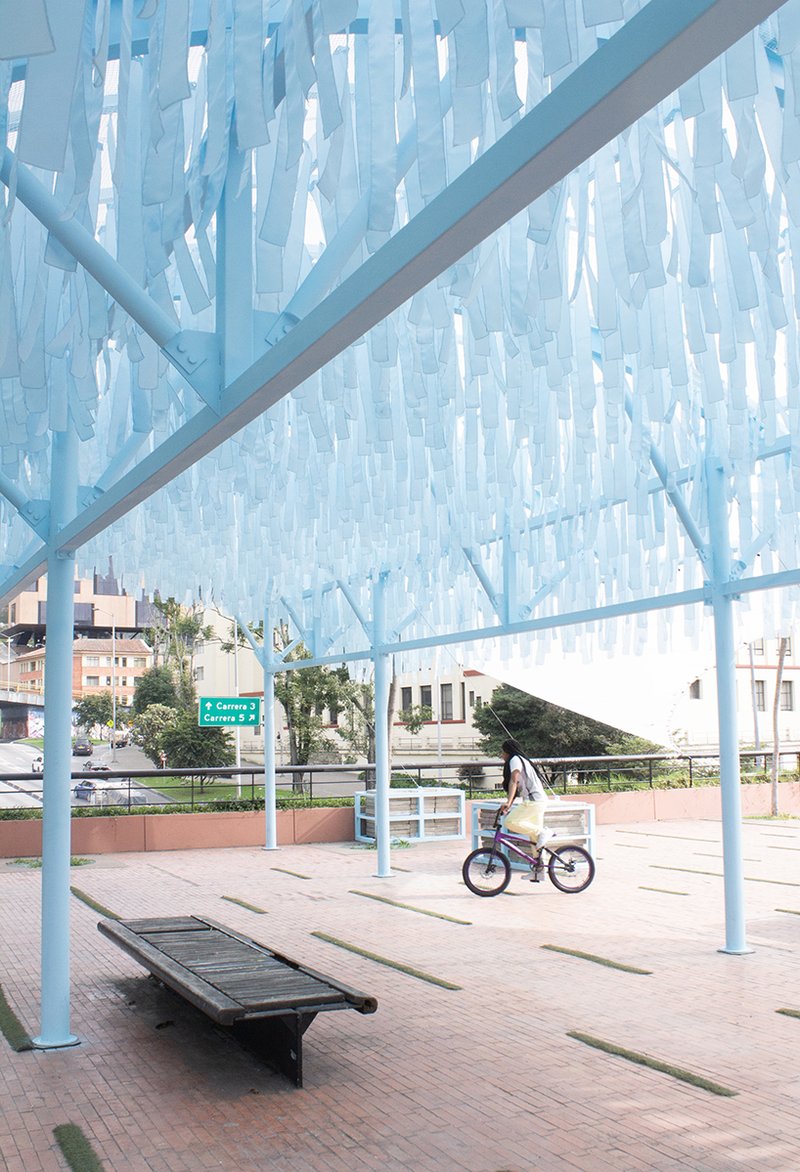
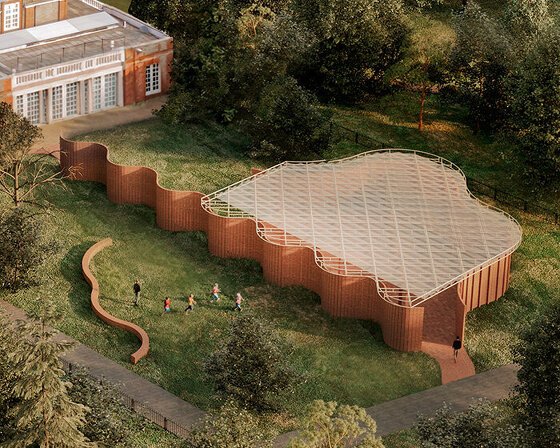
The pavilion's inaugural site, Bogotá's Parque Bicentenario, offers a fitting canvas for this architectural exploration. Nestled between Parque de la Independencia and the Museo de Arte Moderno de Bogotá, the site—originally designed by Giancarlo Mazzanti—welcomes the pavilion's adaptive presence. Here, over a mere four weeks, the structure has played host to a vibrant array of cultural events, from gastronomic festivals to circus wonders and theatrical performances. The pavilion's existence at this locale is ephemeral, yet its impact resonates deeply within the cultural tapestry of the city.
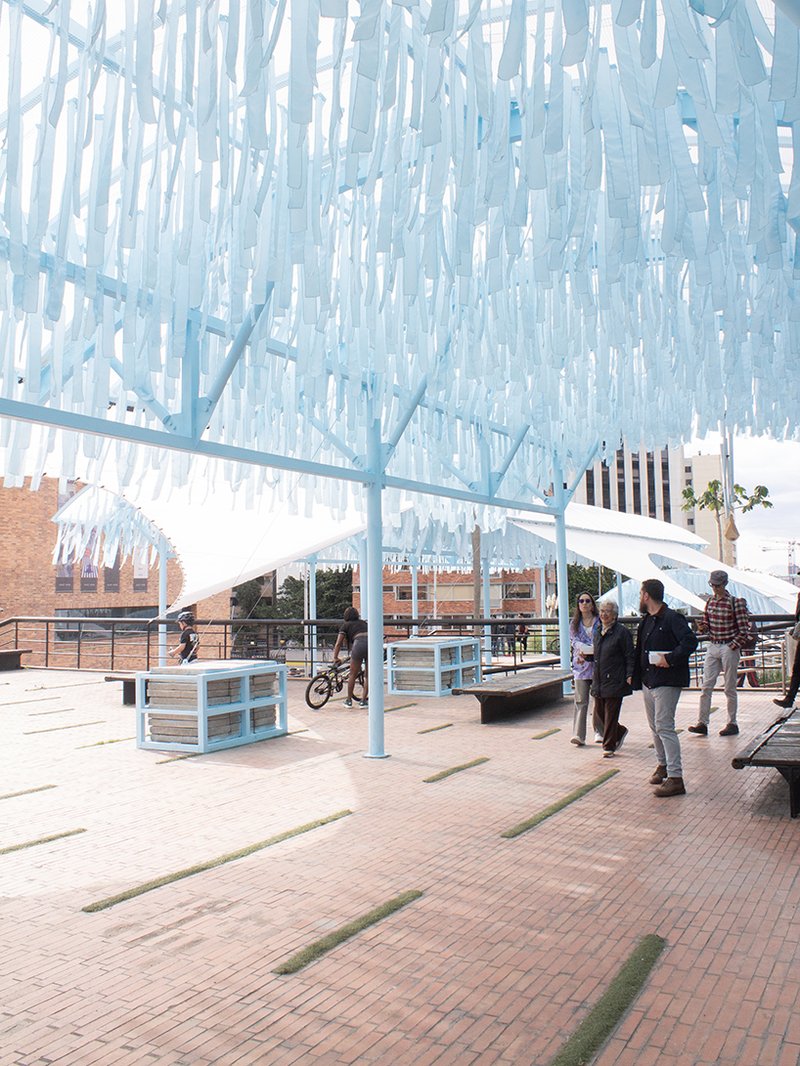
After its initial sojourn, La Memoria del Río will embark on a journey across Bogotá, bringing its unique blend of modularity, reversibility, and mobility to new contexts. It transcends the notion of a static edifice, redefining architecture as a temporal spatial instrument that fosters cultural exchange. By referencing the city's oft-overlooked natural systems, the pavilion blurs the boundary between the built environment and nature, offering a sensory experience that is as enlightening as it is ephemeral.
In a city that thrives on diversity and dynamism, La Memoria del Río is not merely a structure; it is a narrative, a dialogue between the forces of nature and the creativity of human endeavor. As the pavilion continues its journey, it leaves behind a legacy of innovation, a tribute to the elegance of form and the fluidity of function.